Species Playbooks
Trout Fly Fishing Basics
Where trout hold, how to read water before choosing a fly, and why temperature changes everything.
- Beginner
- Pacific Northwest
- All Season
- Trout
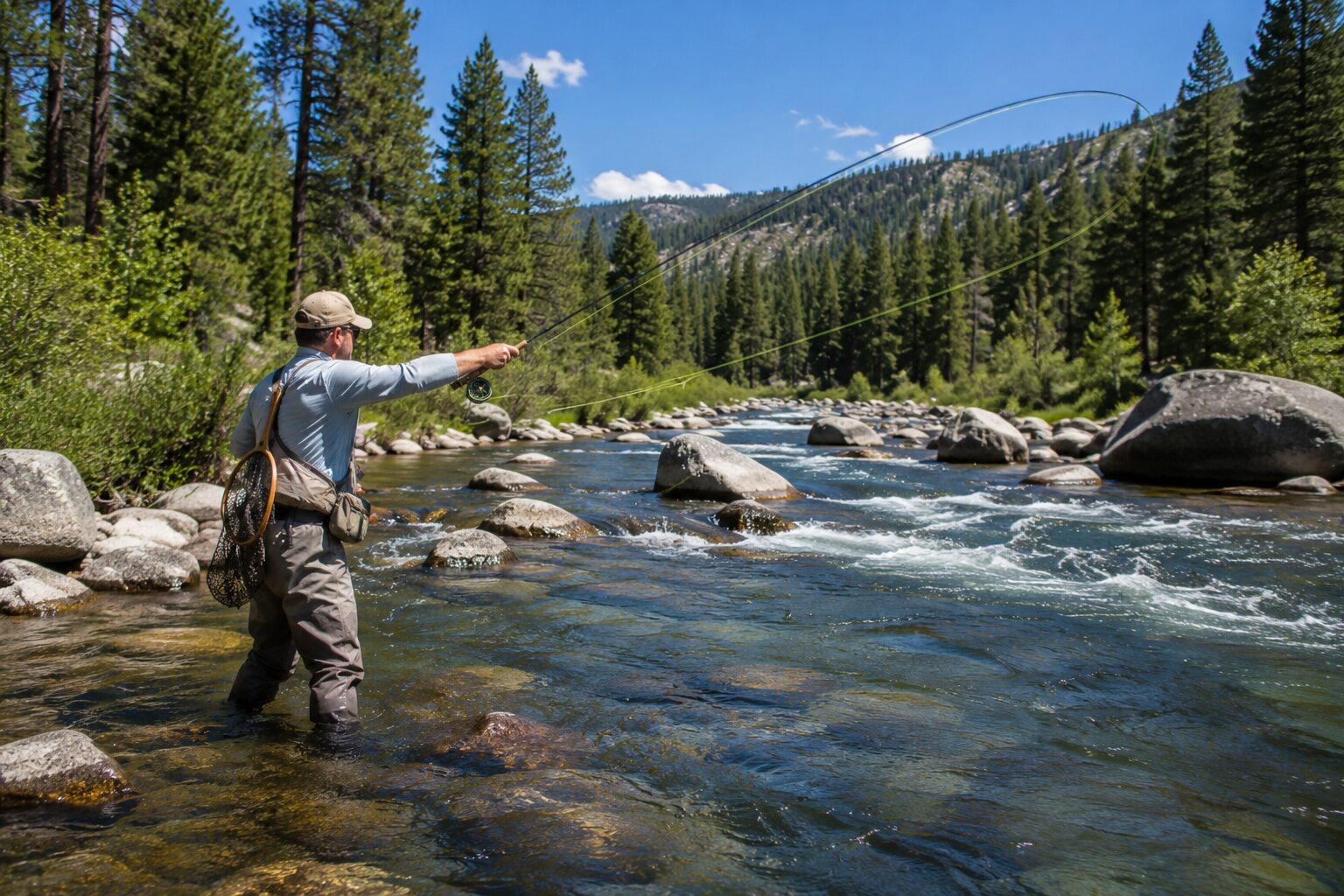
Trout are the fish most fly anglers learn on, and for good reason. They live in readable water, respond to careful presentation, and reward anglers who pay attention more than anglers who own the most gear.
You do not need to understand every hatch to catch trout consistently. You need to understand where they hold, what they are willing to eat, and how to present a fly without spooking them.
Quick Read
For trout, start with:
- Cold, clean, oxygenated water
- Current seams and current breaks
- Depth changes near safety
- A drift that looks natural before a fly that looks perfect
- Water temperature as a daily variable, not a footnote
- Current regulations for the water you are fishing
Trout are not complicated. They are efficient. Find water that lets them feed without wasting energy, and you have found trout water.
Where Trout Actually Hold
Trout look for three things at once: food, safety, and manageable current.
Good holding water usually has:
- A current seam where fast and slow water meet
- Depth or structure nearby for escape
- A clear path for food to arrive
Obvious, dramatic water is not always the best water. A quiet seam beside a fast run can hold more fish than the run itself.
Reading Water Before Choosing A Fly
Before tying anything on, look at the water itself.
Ask:
- Where would I hide if I were a trout here?
- Where does food funnel naturally?
- Is the current soft enough for a trout to hold comfortably?
- Can I approach without spooking the water?
A good angler reads water for five minutes before making a single cast. A great angler keeps reading it between casts.
Matching Behavior, Not Just Color
Trout respond to how a fly behaves as much as what it looks like.
Consider:
- Dry flies should drift drag-free, matching the current's speed
- Nymphs should tumble naturally near the bottom, not swing unnaturally
- Streamers should suggest an injured or fleeing baitfish, not a random retrieve
If trout refuse a fly repeatedly, adjust presentation before size, and size before pattern.
Water Temperature Changes Everything
Trout are cold-water fish. Their comfort, willingness to feed, and survival after release all depend on temperature.
General guidance:
- Cold mornings often mean slower metabolism and deeper holding
- Warming afternoons can trigger feeding windows
- Water that gets too warm stresses trout and increases mortality after release
If water temperature climbs into risky territory for the local fishery, consider fishing earlier, fishing elsewhere, or stopping for the day. Protecting the fish protects the fishing.
A Simple Trout Kit
For most trout water, a practical starting setup includes:
- 4 to 5 weight rod
- Floating line
- 9 ft leader
- Tippet from 4X to 6X depending on fly size and water clarity
- A small selection of mayfly and caddis dries, pheasant tails, and a small streamer
- Polarized glasses to help you read water and see fish
Add specialized gear only after you understand what problem it solves.
Common Beginner Mistakes
Avoid these:
- Wading through water before fishing it
- Casting to open water instead of likely holding spots
- Changing flies before changing presentation
- Ignoring water temperature
- Fighting fish longer than necessary before release
Handle Trout With Care
If you plan to release fish, keep them wet, minimize handling time, use barbless hooks where practical, and avoid fighting fish to exhaustion, especially in warm water.
Healthy releases keep trout water productive for the next angler, including yourself.
Trout fishing rewards patience and observation more than gear. Learn to read water, respect temperature, and present flies naturally, and the rest follows.