PNW Waters
Oregon Coast Water Primer
How rain, tide, and fast-changing clarity shape short, rain-driven Oregon Coast rivers.
- Beginner
- Oregon Coast
- Fall
- Winter
- Spring
- Coastal Cutthroat
- Steelhead
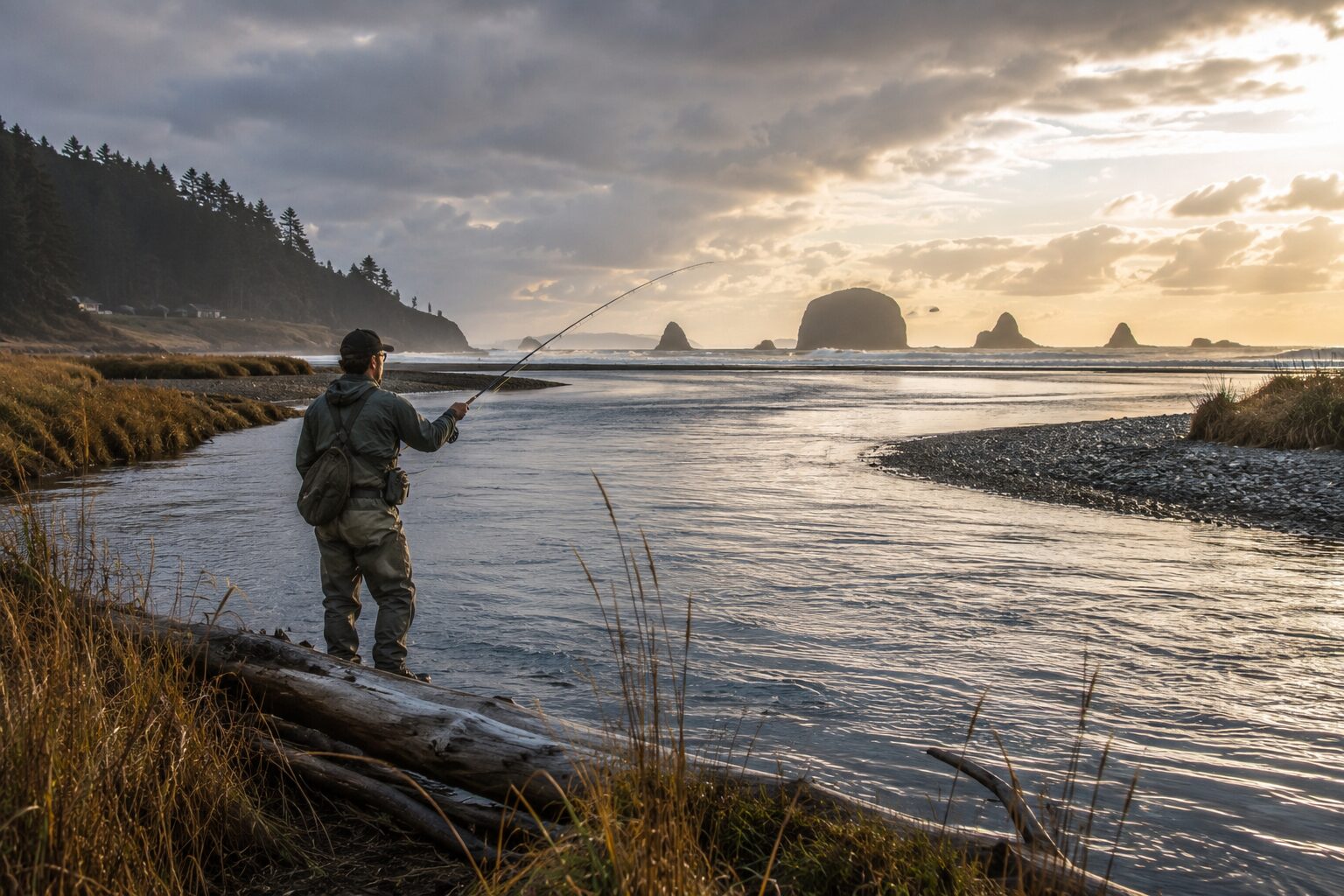
Oregon Coast rivers are short, rain-driven, and tide-influenced near their mouths. They can rise and clear faster than larger inland systems, which makes timing and flexibility more important than any single technique.
These systems reward anglers who watch conditions closely and are willing to adjust plans on short notice.
Quick Read
For Oregon Coast water, prioritize:
- Rain in the last 24 to 72 hours
- Flow trend: rising, dropping, or stable
- Tide stage near the lower river and estuary
- Clarity and visibility for both fish and angler
- Safe access, since coastal terrain can be steep and slick
- Current regulations, which vary by river and season
Coastal rivers can go from unfishable to excellent within a day or two after a storm.
Rain Drives The Calendar
Coastal systems respond quickly to weather. A single storm can blow out a river, and a few dry days can bring it back into shape.
Watch for:
- Rising, muddy water immediately after heavy rain
- A dropping, clearing trend in the days following
- Smaller tributaries clearing faster than the main stem
Rather than fishing on a fixed schedule, plan around the clearing window. Flexibility often matters more than any other factor on the coast.
Tide Changes The Lower River
Near the mouth, tide stage can matter as much as flow.
Consider:
- Incoming tide can push fish and bait upstream
- Outgoing tide can concentrate fish in travel lanes
- Slack tide periods may fish differently than moving tide
If you are fishing the tidal reach, treat the tide chart as seriously as the flow gauge.
Reading Coastal Water
Coastal rivers often braid, undercut banks, and hold wood and structure that create prime holding water.
Look for:
- Current seams near structure
- Depth changes along outside bends
- Softer water behind logs or boulders
- Travel lanes between pools
Because visibility can be limited in off-color water, focus on structure and depth changes rather than trying to sight fish.
Species You May Encounter
Depending on season and location, Oregon Coast rivers can hold sea-run cutthroat, steelhead, and salmon runs, alongside resident trout in the upper systems.
Always confirm which species are open, what gear restrictions apply, and whether wild fish must be released before targeting any specific water.
A Simple Oregon Coast Kit
For most coastal river days:
- 5 to 7 weight rod depending on target species and water size
- Floating line, with an intermediate option useful near tidal water
- Leader and tippet suited to water clarity and target species
- Rain shell, warm layers, and waterproof storage
- Wading boots with good traction for slick coastal terrain
Pack for changing weather. Coastal conditions can shift quickly, even within a single day.
Match The Day
If the river is blown out, consider scouting access points, checking gauges, and planning your next window rather than forcing a fishing day. If conditions are clearing and stable, move quickly. Coastal windows do not always stay open long.
Respect for changing conditions is the real skill on Oregon Coast water.