Species Playbooks
Steelhead Fly Fishing Basics
Why steelhead fishing feels different from trout, how to choose water, and how to handle wild fish with care.
- Building Confidence
- Pacific Northwest
- Fall
- Winter
- Spring
- Steelhead
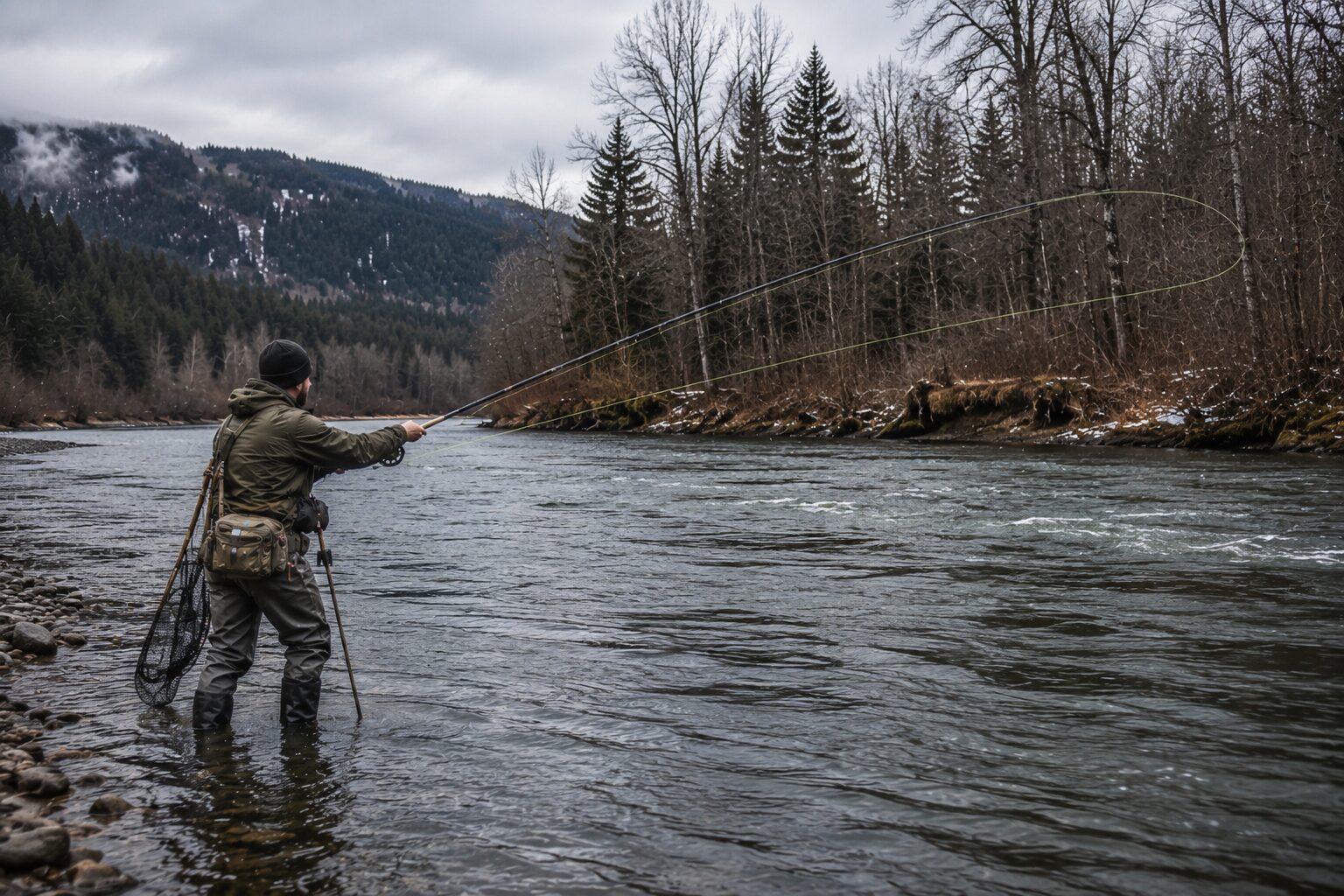
Steelhead fly fishing is built on patience, not volume. You are not searching for constant action. You are choosing good water, presenting a fly with intent, and trusting the process over many casts.
Steelhead are sea-run rainbow trout, and their behavior in freshwater is shaped by that history. They are not actively feeding the way resident trout are, which changes how you should think about the whole day.
Quick Read
For steelhead, think:
- Fewer pieces of water, fished carefully
- Consistent swing speed and depth over constant fly changes
- Conditions and persistence over perfect timing
- Careful handling if you plan to release fish
- Current regulations, wild fish rules, and seasonal closures before you go
Steelhead reward anglers who commit to a plan and trust it longer than feels natural.
Why Steelhead Fishing Feels Different
Resident trout often feed actively and respond to matching a hatch. Steelhead are runners, not full-time feeders. A grab may come from instinct, aggression, or curiosity rather than hunger.
This means:
- Blank periods are normal, even in good water
- Confidence in your water choice matters more than confidence in your fly
- Covering water methodically often beats staying in one spot indefinitely
Expect fewer takes. Make each one count by staying ready.
Choosing Water
Good steelhead water usually offers:
- A walking-pace current, not too fast or too slow
- A consistent depth a fish could hold in comfortably
- Some structure or current break nearby
- Enough length to fish a full swing or drift without rushing
Instead of searching for one perfect spot, look for several pieces of water you can fish thoroughly and confidently.
Swing, Drift, Or Both
Depending on conditions and local norms, steelhead can be approached with a swung fly, a drifted nymph or egg pattern, or both in the same day.
General starting points:
- Swinging suits water with steady, even current
- Drifting or nymphing can be more effective in slower or deeper water
- Skating dry flies can work in specific conditions, often warmer water and willing fish
Choose one primary approach for the day and give it a real chance before switching.
Reading Conditions
Steelhead respond to water clarity, temperature, and flow trend.
Useful signals:
- Slightly off-color water can improve confidence without hurting visibility
- Stable or dropping flows are often more productive than rapidly rising water
- Cold water can slow steelhead down and change where they hold
Conditions will not guarantee success, but ignoring them makes success less likely.
A Simple Steelhead Kit
A practical starting setup:
- 7 to 8 weight single-hand or two-hand rod, depending on water and technique
- Floating or appropriate sink-tip line for the water type
- Strong leader suited to the fly and technique
- A small selection of intruders, marabou tubes, egg patterns, and sparse leeches
- Wading staff, rain shell, and layers for long days on the water
For anyone new to two-hand casting or spey techniques, professional instruction is worth the investment before fishing unfamiliar water.
Handle Steelhead With Care
Wild steelhead populations face real pressure in much of their range. If you plan to release a fish:
- Keep it in the water as much as possible
- Minimize fight time when you can
- Use barbless hooks where practical
- Avoid lifting fish fully out of the water for extended photos
Always check current regulations before targeting steelhead. Rules around wild fish retention, seasons, and specific waters change and vary by location.
Steelhead fishing is a long game. Choose water carefully, commit to a plan, and treat every fish, hooked or not, as part of a process worth protecting.