Species Playbooks
Bass and Panfish Fly Fishing Basics
Structure, retrieves, and timing for warmwater fly fishing when trout water gets too warm to fish responsibly.
- Beginner
- Pacific Northwest
- Spring
- Summer
- Fall
- Bass and Panfish
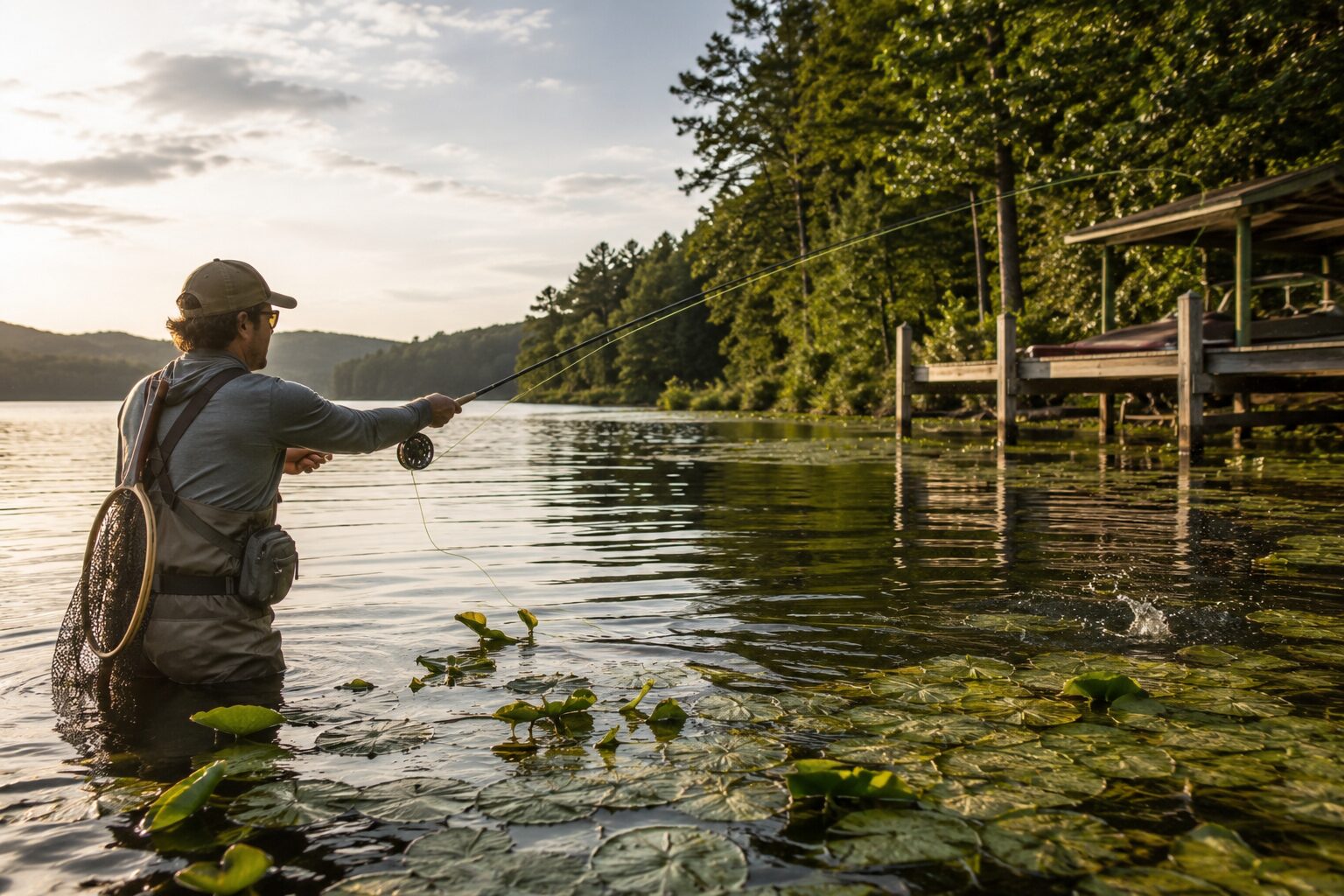
Bass and panfish are often overlooked by fly anglers focused on trout, but they offer some of the most active, visual fishing available, especially when trout water gets too warm to fish responsibly.
They are aggressive, structure-oriented, and forgiving of imperfect presentation, which makes them a good option for building confidence with a fly rod.
Quick Read
For bass and panfish, focus on:
- Structure: docks, logs, weed edges, drop-offs, and shade
- Warmer water than trout tolerate well
- Active retrieves and visual takes
- Low light or overcast conditions for larger bass
- Current regulations, especially on shared trout and bass waters
This is often the right choice on hot summer days when cold-water species need a break.
Structure Is Everything
Bass and panfish relate to structure far more than open water.
Look for:
- Weed edges and lily pads
- Docks, downed trees, and overhanging brush
- Drop-offs near shallow flats
- Points and coves with shade
If a piece of water has no structure, it is unlikely to hold fish for long, even if the depth and temperature look reasonable.
Retrieve With Intent
Unlike a natural dead drift for trout, bass and panfish flies are often fished with an active retrieve.
Try:
- Poppers with pauses to let rings settle before moving again
- Streamers with erratic strips to suggest fleeing baitfish
- Slow, steady retrieves for suspending patterns near structure
Watch how fish respond and adjust speed and pause length rather than switching flies immediately.
Time Of Day Matters
Bass, especially larger ones, often feed more actively in low light.
General patterns:
- Early morning and evening can bring fish shallow and active
- Midday heat can push larger bass deeper or tighter to shade
- Panfish are often more consistent throughout the day, especially around structure
If you are fishing midday in full sun, focus on shaded structure rather than open water.
Panfish Are An Underrated Teacher
Panfish are aggressive, plentiful in many warmwater systems, and excellent for practicing presentation, hook sets, and line control without the pressure of chasing a trophy fish.
They are also a great option for introducing new anglers to fly fishing, since action tends to be frequent and forgiving.
A Simple Bass And Panfish Kit
A practical starting setup:
- 5 to 7 weight rod for bass, 3 to 5 weight for panfish-focused days
- Floating line, with a sinking option useful for deeper structure
- Stout leader and tippet suited to heavier flies and structure
- Small poppers, foam sliders, balanced leeches, and damsel nymphs
- Polarized glasses to spot structure and cruising fish
A 5 weight setup can reasonably cover both bass and panfish if you want to start with one rod.
Common Beginner Mistakes
Avoid these:
- Fishing open water instead of structure
- Retrieving too fast without variation
- Ignoring shade and low-light windows
- Using tippet too light for heavier cover
Bass and panfish fishing rewards a willingness to experiment with retrieve speed and structure. When trout water is too warm or too crowded, this can be the smarter, more responsible choice for the day.