PNW Waters
Inland Northwest and British Columbia River Primer
How temperature swings, wind, and snowpack-driven flows shape interior rivers east of the Cascades and across interior BC.
- Beginner
- Inland Northwest
- British Columbia
- Spring
- Summer
- Fall
- Trout
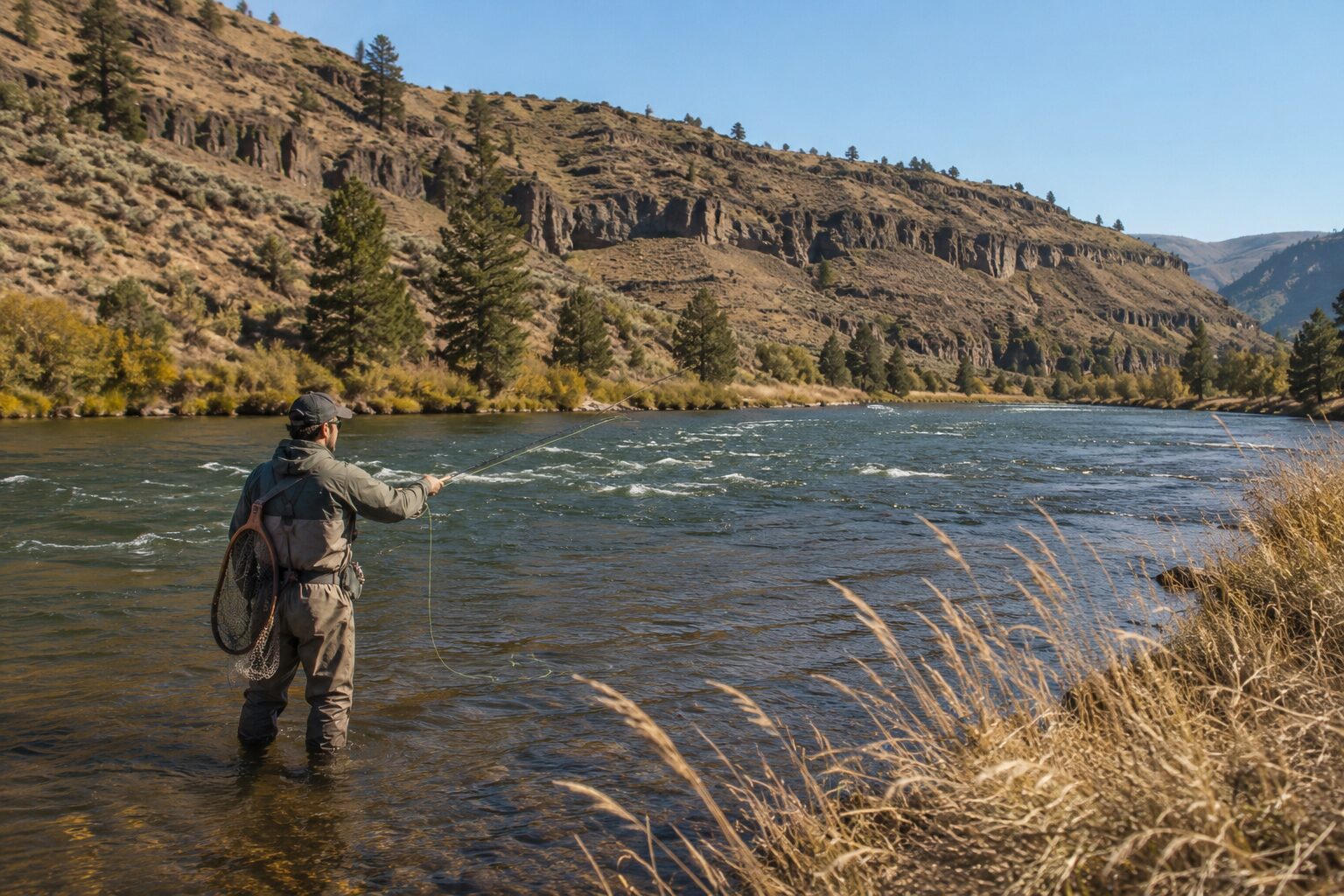
Inland rivers east of the Cascades and across interior British Columbia behave differently than coastal water. Rain matters less day to day. Wind, temperature swings, and seasonal transitions matter more.
These systems often run clearer and more stable than coastal rivers, but they come with their own conditions to respect, especially heat in summer and cold in winter.
Quick Read
For inland and interior rivers, watch:
- Daily temperature swings between morning and afternoon
- Wind, especially on open stretches
- Seasonal flow patterns tied to snowpack rather than rain alone
- Water temperature in summer
- Access and road conditions in winter
- Current regulations, which vary widely across this large region
Inland water rewards anglers who plan around temperature and wind more than rainfall.
Temperature Swings Shape The Day
Interior climates often see larger swings between morning cold and afternoon warmth than coastal areas.
Useful patterns:
- Cold mornings can mean slow starts and deeper-holding fish
- Afternoon warming can trigger insect activity and feeding windows
- Summer heat can push water temperatures into risky territory for cold-water species
Plan your day around the temperature curve, not just the clock.
Wind Is A Real Factor
Open inland terrain often means more consistent, stronger wind than sheltered coastal or mountain water.
Consider:
- Fishing earlier before wind builds
- Using wind to your advantage on lakes and slower river sections by working with drift rather than against it
- Adjusting casting technique and fly weight for windy conditions
Wind is rarely a reason to cancel a trip, but it should shape your tactics.
Snowpack, Not Rain, Drives Flows
Unlike coastal rivers, many inland systems are driven more by snowmelt and seasonal runoff than by individual storms.
This means:
- Spring runoff can dominate river conditions for weeks
- Late summer and fall often bring the clearest, most stable water
- Winter access can be limited by weather and road conditions rather than water clarity alone
Understanding the seasonal snowpack pattern helps you choose better windows than watching daily weather alone.
Reading Interior Water
Interior rivers often show longer runs, more defined riffles, and clearer sightlines than brushy coastal systems.
Focus on:
- Current seams and current breaks
- Depth changes near structure
- Riffles feeding into deeper runs
- Shaded stretches during summer heat
Clearer water often means fish are more easily spooked, so a careful approach matters as much as fly choice.
A Simple Inland And Interior Kit
For many inland river days:
- 4 to 6 weight rod depending on target species and wind
- Floating line, with a sink-tip option for deeper runs
- Longer leader for clear, low water
- A mixed box of mayfly and caddis dries, nymphs, and small streamers
- Layers for large temperature swings, plus sun protection
Wind-resistant fly boxes and slightly heavier tippet can help on exposed water.
Respect The Region's Size
Inland Northwest and interior British Columbia cover an enormous range of water types, elevations, and climates. Conditions on one river may have little in common with another only a few hours away.
Treat any general guidance, including this one, as a starting point. Always confirm current conditions and regulations for the specific water you plan to fish.