PNW Waters
PNW Stillwater Trout Primer
How to approach lakes and stillwaters by watching wind, depth, shoreline cover, and seasonal insect movement.
- Building Confidence
- Pacific Northwest
- Inland Northwest
- British Columbia
- Spring
- Summer
- Fall
- Trout
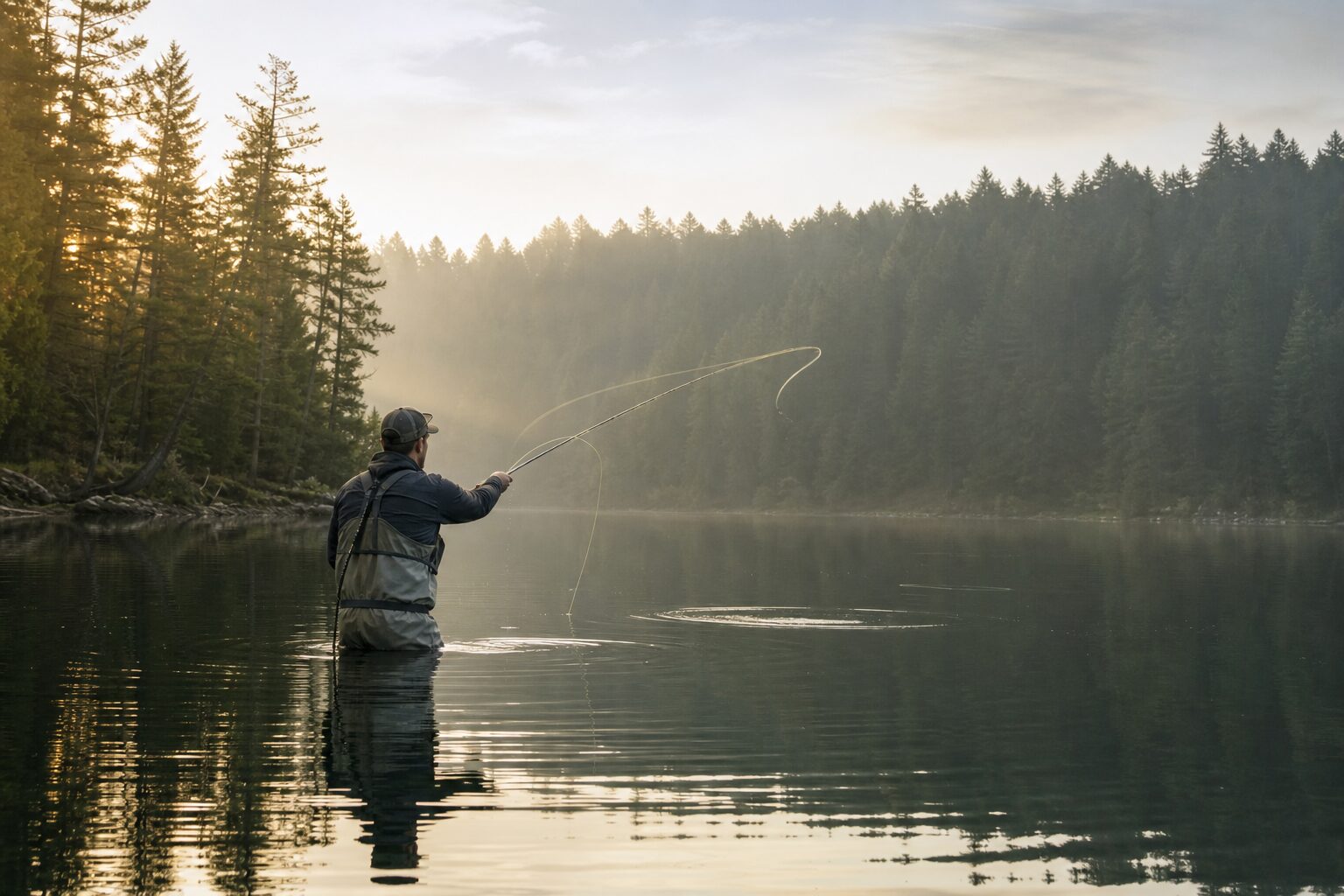
Stillwater fly fishing can feel mysterious if you learned on rivers. The water does not point downstream. Fish move, food moves vertically, and wind can make one shoreline better than another.
The solution is to watch before casting.
Quick Read
On PNW lakes and stillwaters, start with:
- Wind direction
- Surface activity
- Depth changes
- Weed edges
- Inlets and outlets where open and appropriate
- Water temperature
- Food behavior
Stillwater is not empty water. It is moving more subtly than a river.
Wind Is Information
Wind pushes surface food, creates lanes, and can concentrate fish. A calm lake may look easier, but a light chop often helps both presentation and fish confidence.
Look for:
- Wind lanes
- Foam lines
- Points receiving food
- Shorelines with broken surface
- Places where insects collect
Wind can be annoying, but it is rarely meaningless.
If one side of the lake is receiving food and another side is flat and lifeless, begin where the lake is doing work for you.
Depth Changes Matter
Trout in stillwater often relate to depth, temperature, and food movement.
Useful places to study:
- Drop-offs
- Weed edges
- Inlets and outlets
- Shallow shelves near deeper water
- Points and bays
If you can identify depth changes, you can fish with more purpose.
Many stillwater mistakes come from fishing a fly at the wrong depth for too long. If fish are feeding subsurface, a good fly two feet above or below the zone may look irrelevant.
Match The Retrieve To The Food
A fly sitting still, crawling slowly, pulsing, or stripping quickly can suggest very different food.
Start with a simple question: what would this insect or baitfish actually be doing?
Then retrieve accordingly.
Examples:
- Chironomids often call for patience and depth control
- Leeches may work with slow strips, pauses, or gentle pulses
- Damsel nymphs often suggest a steady, swimming retrieve
- Baitfish patterns may need sharper movement
- Dry flies need observation before imitation
The retrieve is part of the fly.
Read The Surface
Surface activity is not always what it first appears to be.
A splashy rise may mean fish are chasing emerging insects. A quiet sip may mean small food in the film. Repeated rises in a lane may show a travel route. No rises at all does not mean no fish; it may mean the food is deeper.
Before changing flies, ask whether you are fishing the right depth and speed.
Keep The First Kit Simple
For many PNW lakes, begin with:
- 5 weight rod
- Floating line
- Long leader
- Chironomids
- Balanced leeches
- Damsel nymphs
- Small streamers
- Dry flies for visible surface activity
Add sinking lines and specialized gear after you know what problem you are trying to solve.
If you fish stillwater often, an intermediate or full-sinking line can eventually help. But the first skill is learning where fish are and how they are feeding.
A Simple First Plan
When you arrive:
- Watch wind and surface activity.
- Choose a shoreline or structure with food movement.
- Start with a simple pattern at a realistic depth.
- Change depth before changing every fly.
- Move if the water gives no signs.
Stillwater rewards patience, but not passive waiting. Watch, adjust, and keep asking what the lake is showing you.